What Are AI Interviewer Tools?
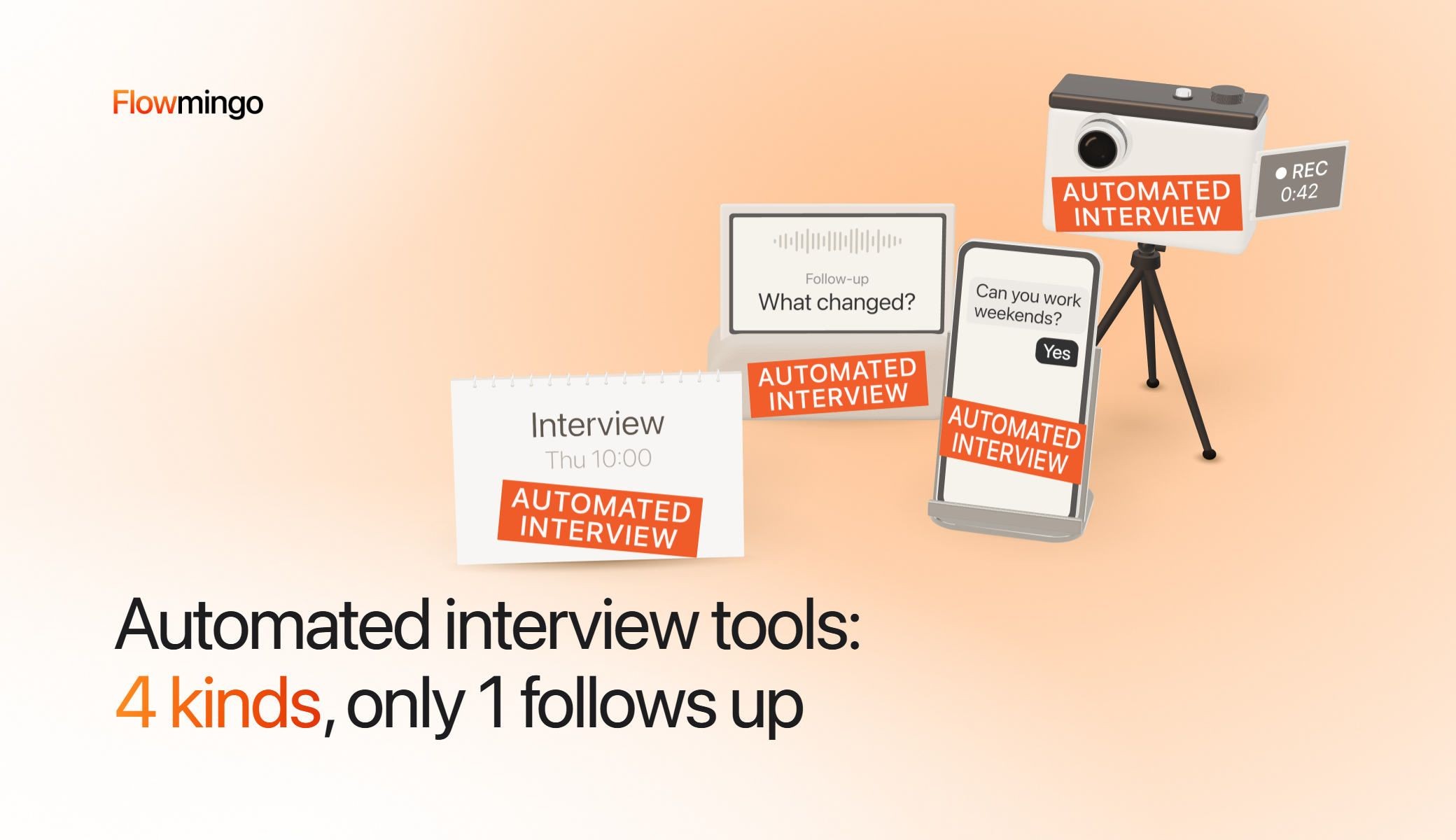
AI interviewer tools are advanced software systems powered by artificial intelligence that help conduct, assess, and optimise interviews across various hiring stages.
“We've been using Flowmingo since September 2025 to hire for our team, and honestly, it's become one of our go-to tools for recruitment.”
— Md Mushtaque Ansari, Founder & CEO, Techity Solutions These tools streamline the recruitment process by automating candidate screening, interviewing, and evaluation — helping recruiters make faster, fairer, and more data-driven decisions.
Key Functions of AI Interviewer Tools
- Resume Screening: AI automatically scans resumes to identify best-fit candidates based on skills, experience, and job relevance.
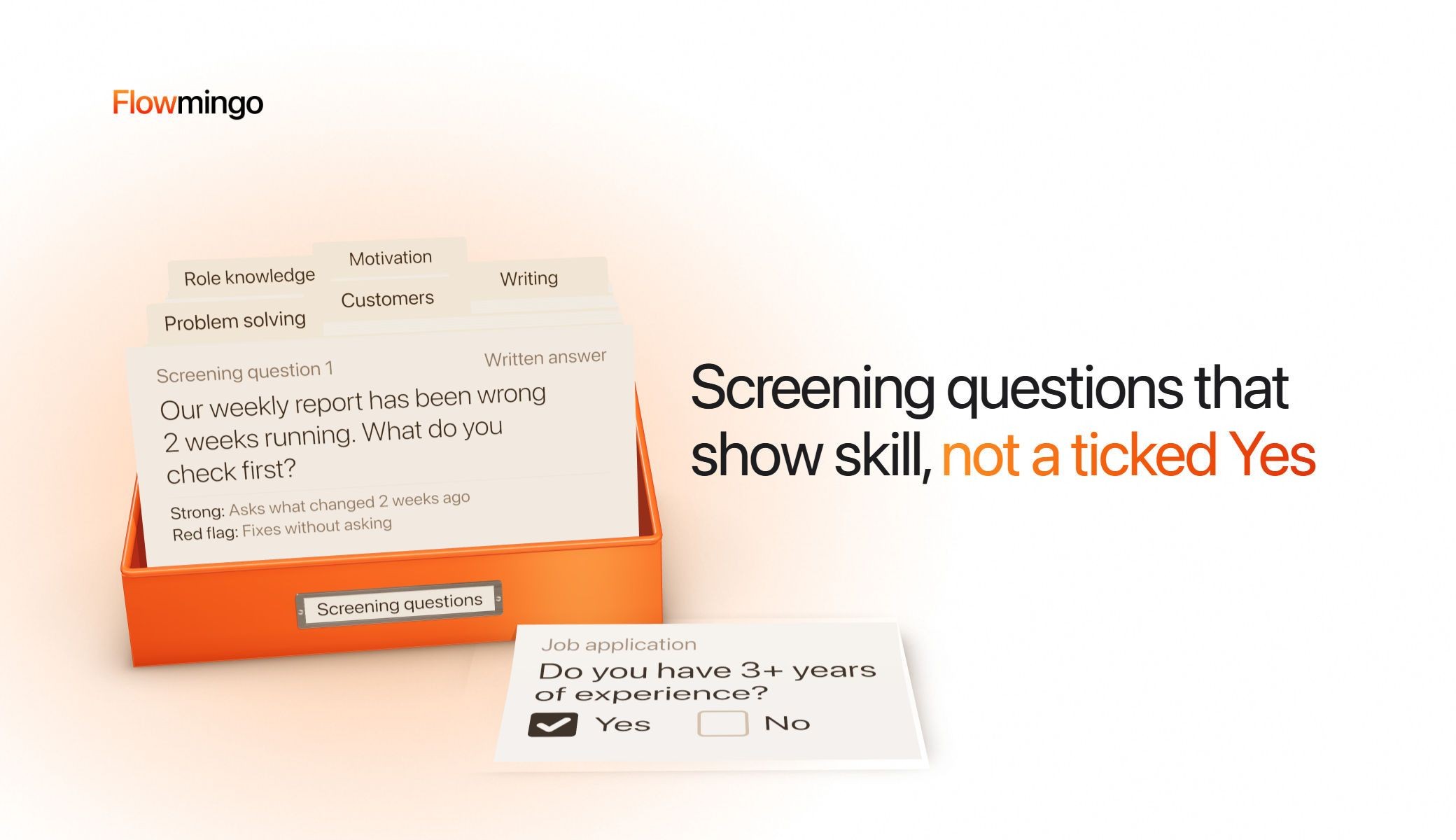
- Conducting Interviews: The AI interviewer handles initial interview rounds using structured or adaptive question sets.
- Candidate Assessment: the answers are evaluated against the role's criteria.
- Actionable Insights: Recruiters receive data-driven feedback, ranking, and insights to make informed hiring decisions.
Key Features of AI Interviewer Tools in 2025
1. Multimodal Analysis
Some AI interviewers analyse more than the words, such as voice or video. Ask any vendor what its score is based on; Flowmingo rates the answers against your criteria.
2. Personalisation
AI tools dynamically tailor interview questions based on the role, skills, and company objectives.
They adjust scoring metrics to reflect organisational culture and values.
3. Language & Cultural Sensitivity
Global hiring requires inclusive evaluation.
Many AI interview tools now run in several languages; Flowmingo's runs in 60+.
4. Real-Time Feedback
Candidates receive instant insights on their responses, while recruiters get immediate data visualisations and scores for faster decisions.
5. Bias Mitigation
Structured questions and clear criteria reduce the room for unconscious bias; human review is still needed.
Benefits of AI Interviewer Tools
1. Efficiency
Automates repetitive tasks like resume parsing, scheduling, and initial screening — giving recruiters more time for strategic hiring.
2. Scalability
Capable of handling hundreds of interviews simultaneously, making high-volume recruitment fast and consistent.
3. Enhanced Candidate Experience
Flexible, self-paced interviews allow candidates to record responses anytime, anywhere.
Personalised questions and real-time feedback improve engagement.
4. Data-Driven Decisions
AI-generated scorecards, sentiment analysis, and performance metrics ensure decisions are based on evidence, not intuition.
5. Cost Savings
By reducing manual workload and interviewer hours, companies cut hiring costs while improving quality-of-hire.
How to Choose the Right AI Interviewer Tool
When selecting an AI interviewer tool, check these 4 things (or compare Flowmingo with other AI interviewers):
1. Integration
Check that it connects to your ATS (Applicant Tracking System) and HR workflows.
2. Customisation
Look for tools that allow role-specific questions, flexible scoring criteria, and configurable evaluation models.
3. User-Friendliness
A clean, intuitive interface improves usability for both recruiters and candidates.
4. Security & Compliance
Your tool should guarantee data privacy, encryption, and adherence to GDPR or equivalent data protection standards.
How Flowmingo Leverages These AI Features
At Flowmingo, our AI interviewer works like this:
- Questions from your job description: the AI drafts 1–30 questions; you edit them.
- A spoken interview: the AI asks each question aloud and follows up when an answer misses the question.
- 60+ languages: applicants pick from the ones you allow.
- A report per applicant: recording, transcript and a 0–10 rating per criterion with written reasons.
- Connects to your stack: REST API, webhooks and MCP on every plan.
Final Word: The Future of Hiring Is AI-Driven
AI interview tools make first-round screening scale; fairness still depends on the questions, the criteria and human review.
The key lies in thoughtful implementation: adopting AI that enhances fairness, personalisation, and recruiter efficiency.